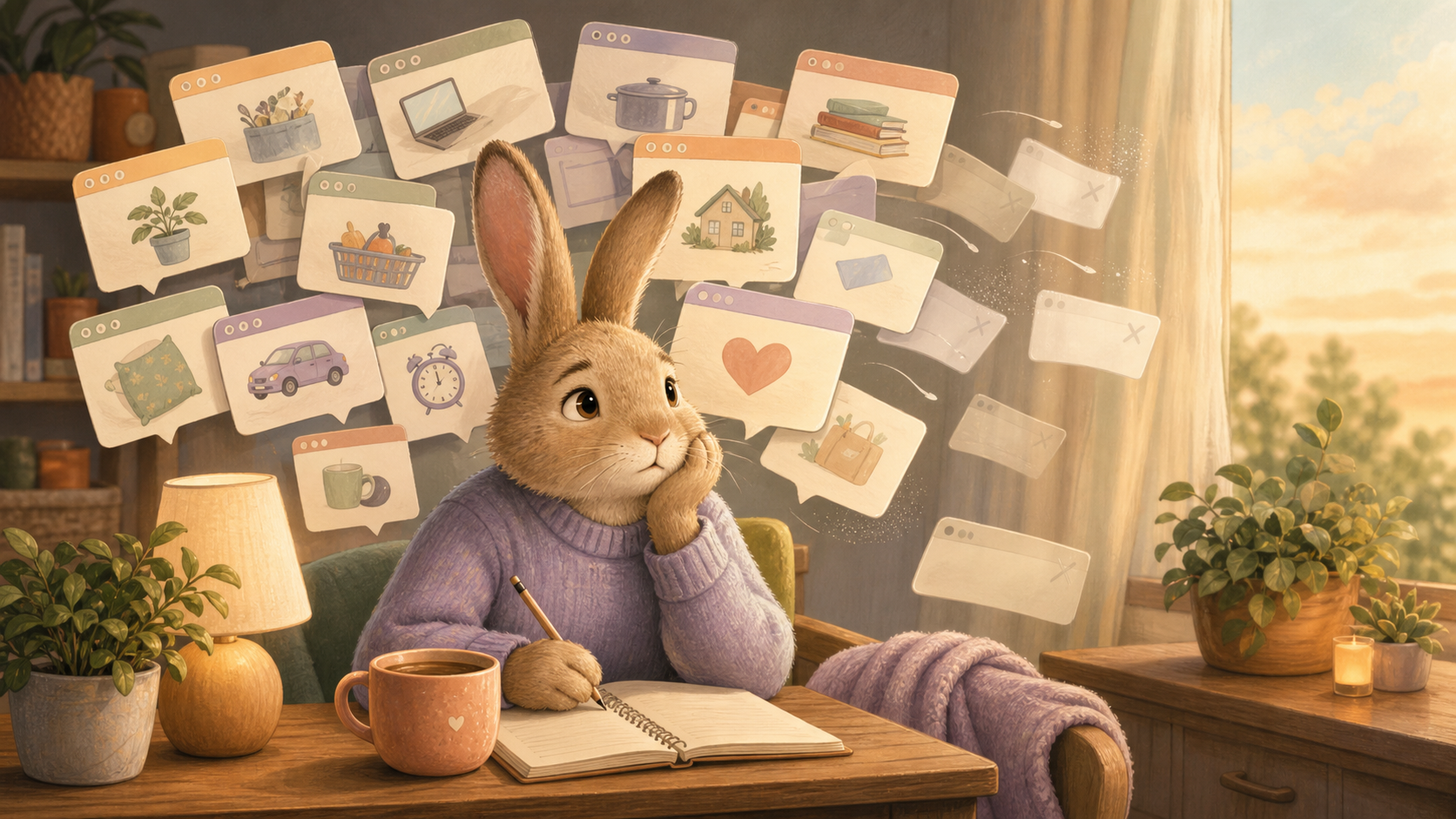
Some days my brain feels like an internet browser somebody forgot to close.
Forty-seven tabs are open. Music is playing from one of them. I have no clue which one. One tab is a bill, one is a conversation I have replayed six times, one is something I need to remember before Tuesday, and the rest are anxiety wearing different little hats.
On those days, even simple decisions feel weirdly expensive. What should I eat? Which email should I answer first? Do I have enough energy to shower, or are we calling dry shampoo self-care again?
It’s easy to treat that feeling like proof we’re failing at time management. If we were more organized, more motivated, more positive, more whatever, surely our brains would stop buffering.
That was not helpful.
Stress is a normal physical and emotional response to a challenge. It can still make concentration, sleep, decision-making, and everyday tasks harder, especially when it sticks around. The National Institute of Mental Health also makes an important distinction: stress usually has an outside cause, while anxiety can continue even when there is no immediate threat.
In plain English: sometimes life is a lot, and sometimes the alarm in your head keeps ringing after the smoke has cleared.
First, stop trying to fix your whole life by lunchtime
When everything feels urgent, the first instinct is often to make a heroic plan. A color-coded schedule. A fresh notebook. A complete personality renovation beginning at 6:00 a.m. tomorrow.
Then tomorrow arrives and, shockingly, I’m still the same person.
A smaller reset works better:
- Write down everything competing for attention.
- Circle one thing that genuinely needs attention today.
- Move the rest into “this week,” “can wait,” or “not mine to carry.”
This isn’t glamorous time management. It’s triage. When your mind is overloaded, “What is the next kind, useful thing?” is a much better question than “How do I become perfect by dinner?”
Turn down the noise
Not every open tab is a task. Some are just noise pretending to be information.
The CDC recommends taking breaks from news and social media as one healthy way to manage stress. That doesn’t mean ignoring the world. It means giving your nervous system a chance to exist without being handed a fresh emergency every fourteen seconds.
Try ten quiet minutes. Put the phone in another room. Close the email. Sit somewhere cozy. Look out a window. Let boredom happen. Your brain may act like you have canceled Christmas. Give it a little time to settle.
Get your body back on your side
Mental health doesn’t live in a separate little apartment above the neck. Hunger, exhaustion, pain, caffeine, and being stuck in one position all day can make a rough moment feel rougher.
Drink some water. Eat something with actual substance. Stretch your shoulders. Step outside if you can. Rest if you need rest. None of this cures anxiety or depression, and self-care should never become a reason to delay real treatment. These basics can make the next few minutes more manageable.
Slow breathing, guided imagery, and progressive muscle relaxation are examples of techniques intended to bring on the body’s relaxation response, according to the National Center for Complementary and Integrative Health. If a breathing exercise makes you feel worse, stop. The goal is care, not forcing yourself through another task.
Use affirmations you can actually believe
I like positive thinking. I don’t like using positivity as duct tape.
“Everything is amazing” doesn’t land when everything is very clearly not amazing. A useful positive affirmation should be something you can actually say to yourself and believe.
- I only have to handle the next step.
- Rest is part of taking care of myself.
- This feeling is real, but it isn’t the whole story.
- I can ask for help before I reach my breaking point.
- I deserve the same patience I give my friends.
Gratitude can be part of a hard day without pretending the hard part isn’t there. You can appreciate a warm cup of coffee and still be having a hard day. You can count your blessings and still need support.
Borrow some calm from another person
Stress likes isolation. It tells us we’re a burden, everybody else is coping better, and we should wait until we have a polished explanation before reaching out.
You don’t need a polished explanation.
Text a friend: “My brain is crowded today. Can you talk for a few minutes?” Sit with someone who makes you feel safe. If stress, anxiety, depression, or sadness keeps interfering with daily life, causes you to avoid things, or doesn’t let up, talk with a qualified mental health professional. NIMH notes that persistent symptoms that disrupt everyday life are a sign it may be time to get more help.
Resilience doesn’t mean never falling apart
Resilience isn’t smiling through everything. It isn’t pretending pain taught you a beautiful lesson five minutes after it happened. Sometimes resilience is canceling one plan, eating a sandwich, crying in the shower, and trying again tomorrow.
Maybe your brain still has too many tabs open tonight. You don’t have to close all of them at once.
Close one.
Take one breath.
Choose one kind next step.
That counts.
Sources and further reading
- National Institute of Mental Health: “I’m So Stressed Out!” Fact Sheet
- Centers for Disease Control and Prevention: Managing Stress
- National Center for Complementary and Integrative Health: Relaxation Techniques
This post is for general information and personal reflection. It’s not a diagnosis or a substitute for professional mental health care.